Tropical diseases, such as dengue, chikungunya, and Zika, are still relatively common in countries like Brazil, Colombia, and Peru. In these regions , anyone who has not yet been affected by these diseases likely knows someone who has. With climate change, the incidence of these diseases has been increasing, despite vaccines and public health surveillance efforts to control the vectors. That is why controlling the spread of the Aedes aegypti mosquito, the vector for these diseases, remains a social challenge, which caught the attention of a group of students from Itumbiara, a town in the interior of Goiás state, Brazil.
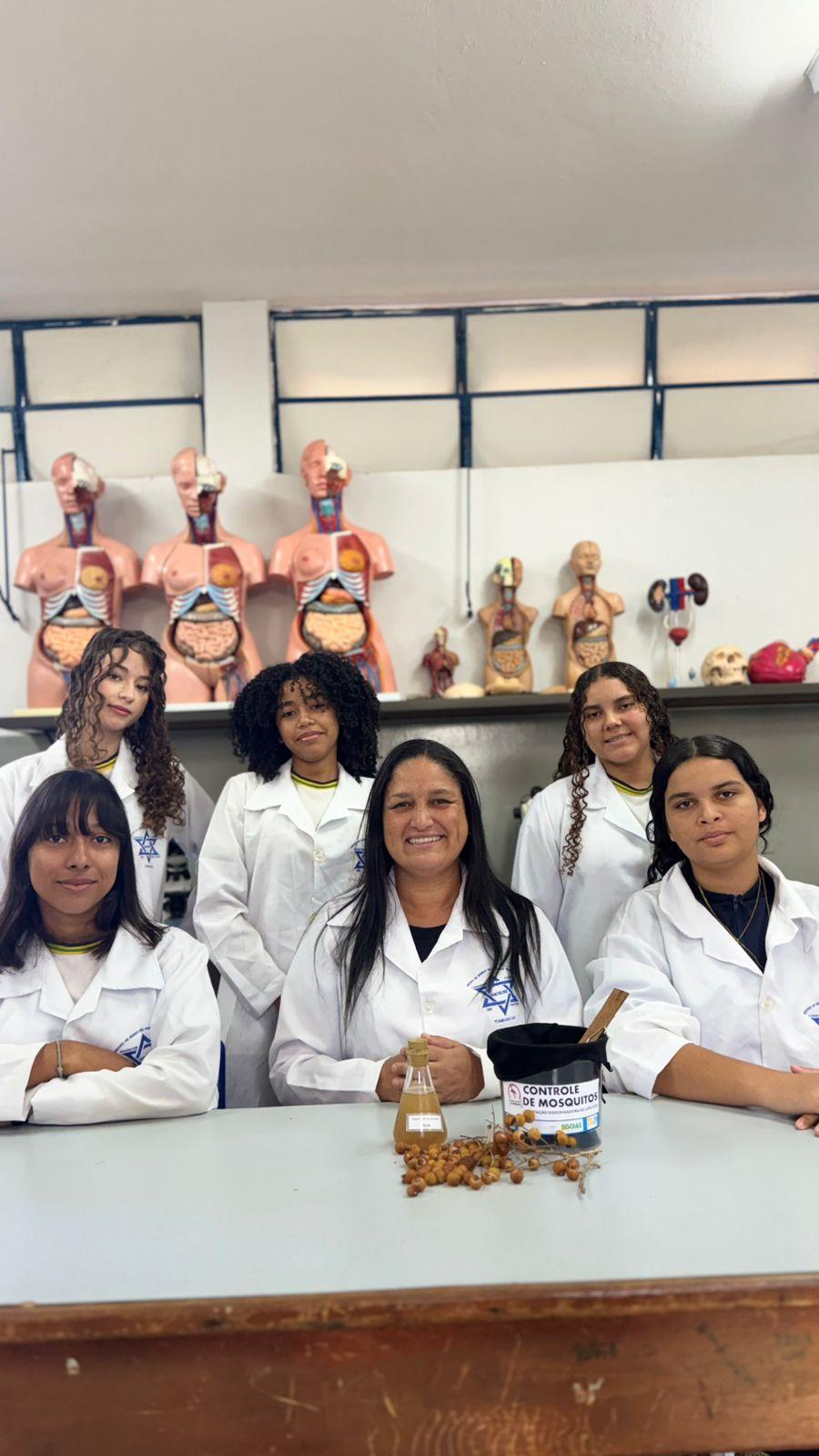
The team came up with an alternative solution to the problem: creating a natural plant-based larvicide developed from species native to Brazil. The project “Effect of Plant Extracts on Aedes aegypti,” a finalist in the 2025 Solve for Tomorrow Brazil, was developed by high school students, in the third-to-last year of compulsory education, aged 15 to 16. The group observed a steady increase in cases of these diseases in the city, especially in 2024, when there were nearly 700 confirmed cases of dengue and 530 of chikungunya in the municipality. The state, by the way, broke records for infections, drawing special attention from the Ministry of Health, which implemented control measures.
After reading news reports about rising cases, the mediator teacher, Ayanda Lima, presented the challenge to her students. “Our school is very large, located near several bars, and it’s very difficult to control the breeding sites of the Aedes aegypti mosquito. Many people were on sick leave because of these diseases, so we had to do more than just raise awareness,” she explains.
Initially, with the entire class, the teacher proposed testing the repellent properties of certain plants in the lab. This search for solutions to real-world problems is already part of the teacher’s pedagogical approach, who teaches biology and experimental science. “I’ve never been the kind of teacher who just asks students to make a poster. We have to seek concrete solutions,” she says. When she joined the Dom Veloso Full-Time Education Center, she helped transform the traditional science fair into an activity more focused on solving local problems. “The projects began to follow a clearer scientific methodology, with an introduction, hypothesis, and objective. It was no longer just a demonstration of knowledge,” she recalls.
From the lab to the community: testing a formula to combat dengue
In laboratory tests, the team developed a method for extracting active substances from plants through maceration. The wingleaf soapberry fruit is immersed in a liquid (in this case, distilled water), which causes the plant’s components to dissolve in the solvent, forming the extract. The wingleaf soapberry plant (Sapindus saponaria) showed good results in repelling Aedes aegypti, and the team decided to move forward with it, given the teacher’s prior experience with other projects that had used the wingleaf soapberry plant.
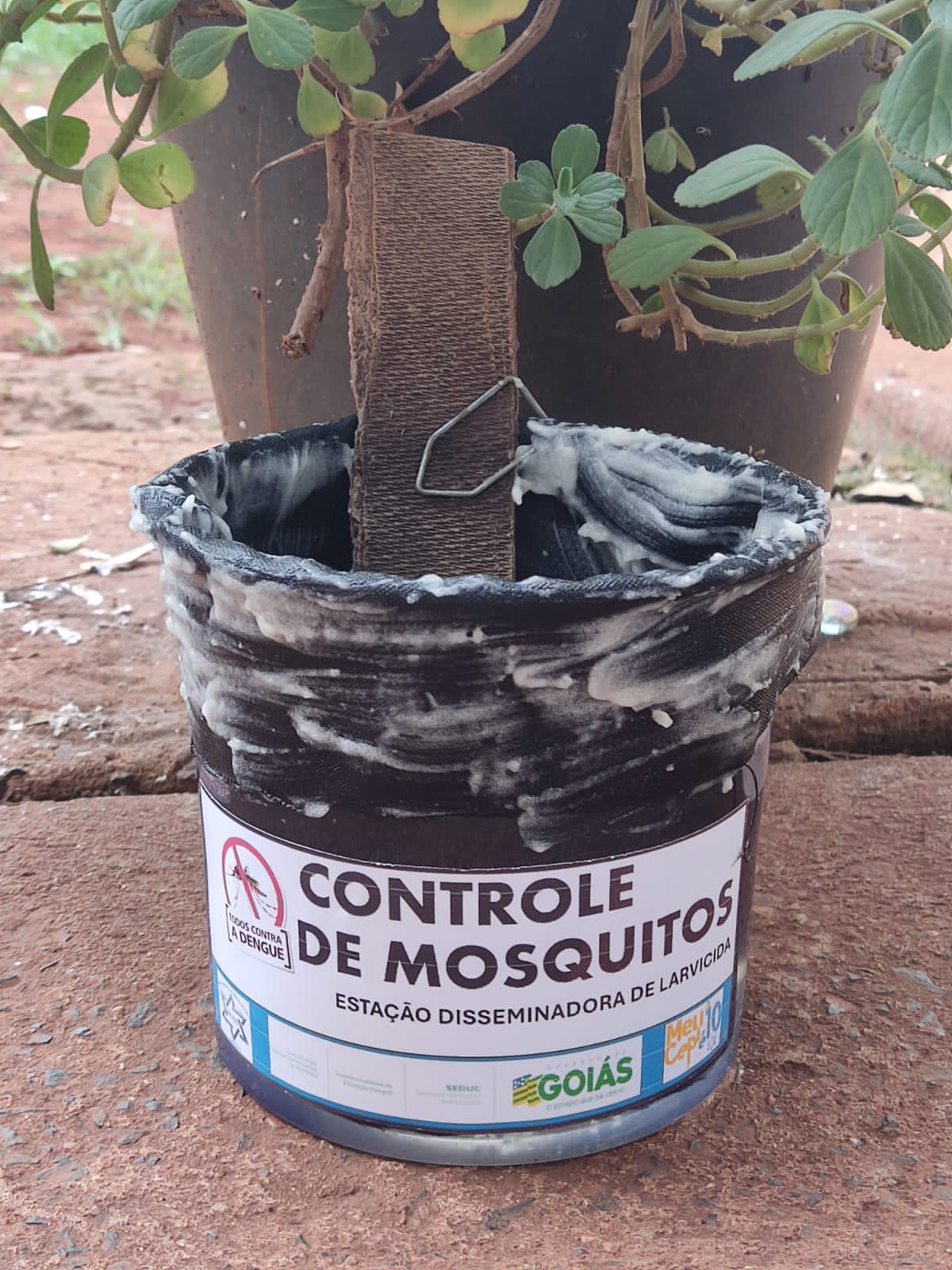
With the initial experiments showing positive results, the group began to devise a strategy to bring the solution to the community. During the experimental lab session, they researched Larvicide Dissemination Stations (EDLs), a technique widely used in Brazil to facilitate the spread of larvicide by the mosquitoes themselves, between treated sites and untreated breeding grounds.
It is a low-cost, efficient, and easy-to-replicate strategy: a plastic container filled with water is used to attract mosquitoes, covered with a damp black cloth impregnated with a very fine powdered larvicide. When an adult mosquito lands on the surface of the EDL, particles of the larvicide adhere to the mosquito’s legs and body. Since female Aedes mosquitoes prefer to visit many breeding sites to lay just a few eggs at each one, they end up carrying the larvicide with them to these sites, which become lethal traps for immature mosquitoes.
To achieve this, the chemical pesticide pyriproxyfen is typically used. However, the teacher stated that the team wanted to replace it with a natural component. “This was one of the areas where the mentoring from Solve for Tomorrow helped a lot. It boosted our work, took the results we had in the lab, and showed us the way forward with a natural component and how to take it further,” Lima acknowledges.
To meet the program’s requirements, the class itself selected the five students to represent the group and move forward with the proposal. “Now, the main challenge was to take the extract, which was liquid, and turn it into a gel to apply to the EDL,” she explains.
Cold pregelatinized corn starch around USD 6,00 (for 500g) and is a product that has already undergone a pre-cooking and drying process, making it more porous and capable of absorbing cold water. As a result, it adds thickness and stability to foods without requiring cooking, which simplifies production and preserves characteristics such as flavor, texture, color, and aroma.
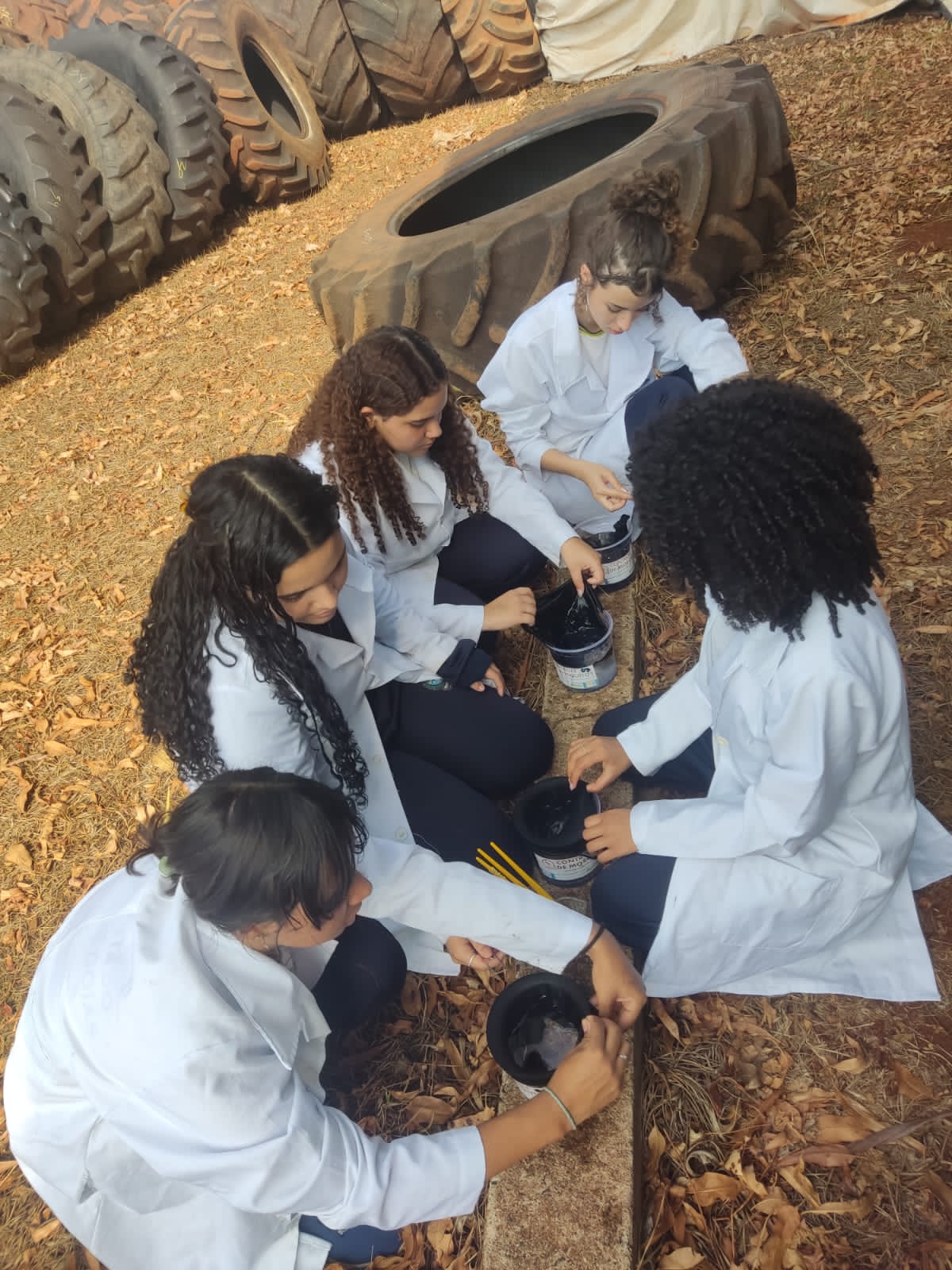
With the gel extract ready, it was time to test it in the community. First, the group identified the locations with the highest concentrations of mosquito breeding sites in the city, with the support of a municipal disease control official. They then selected three sites, where they installed 18 EDLs and continued monitoring for several days, collecting samples to observe the effects on the mosquito larvae. According to the teacher, the class used insect repellent and lab coats and made sure to spend as little time as possible on site to ensure the students’ personal safety.
The results exceeded expectations: “The mosquito’s life cycle takes 10 days to reach adulthood. We observed that by the eighth day, all the larvae had already died; they hadn’t even reached the pupal stage [the final stage before the adult mosquito emerges]. We were amazed by this result, which went beyond our expectations,” says Lima. Using a sample from the soap extract, distilled water, and pregelatinized cornstarch, any community or school can replicate this solution.
Strengthening student leadership and raising the school’s profile in the community
Educator Ayanda Lima notes that, after participating in Solve for Tomorrow, the school increased visibility in the community and became a leader in STEM research and projects. Students also feel more inspired and excited to participate in experiences like these. “The school is buzzing. You have no idea how much of an impact the program has had on the city and the state. It’s impossible to describe! In the first week of school, I’d already selected classes to develop projects,” the teacher exclaimed.
According to her, the state secretary of education visited the school to learn about the institution, and all the recognition it has earned gives school administrators greater confidence in understanding the importance of investing in this type of initiative. “I get emotional just talking about it. You know that feeling of a job well done, of knowing it worked out?” she says, her eyes welling up.
While before the program’s results were announced the teacher felt that the local health department wasn’t open to hearing about the class’s findings, she feels that the reception has changed following the interest generated by Solve for Tomorrow: “It seems they’ve opened the doors a little. I was invited by the State Department of Health to share what we’d done; let’s see what the next steps will be,” she shares. The next step, the educator envisions, is to establish a partnership with the city’s endemic disease control department to install more EDLs.
The change in the students’ behavior was also evident to the teacher. At first, they were very shy, so much so that, on the eve of the pitch, during the program’s final phase, they were still nervous about giving the presentation. “The night before, at the hotel, we had to have a talk with them to help them gain that confidence, you know? After the final and once they got past that, it seemed like they came out of their shells,” she jokes. “I saw them walking down the hallways, their eyes shining, radiant, with a whole new attitude. And it’s contagious. One of the girls’ younger sisters, who didn’t seem very interested in this kind of thing, has now come to me wanting to follow in her older sister’s footsteps,” reveals the teacher, she says emotionally.
Lima also highlights how her classes learned the importance of making mistakes in STEM projects through this experience. “During the first week of school this year, my class gave me a letter that still moves me to this day. They said: ‘We want to study, research, make mistakes, learn, and grow together with you. We want to represent our school with pride and prove that when a teacher believes, an entire classroom can flourish. If science transforms lives, we want to be proof of that,’” she concludes.