Turning everyday problems into learning opportunities is one of the main strengths of Project-Based Learning (PBL). More than just an active methodology, PBL encourages students to research, experiment, and develop concrete solutions to real challenges in their communities.
This was precisely the starting point for teachers from different Latin America countries who participated in the international course “Project-based Learning: A route from idea to action”, promoted by the Samsung Solve for Tomorrow Latam platform. Throughout the training, hundreds of educators developed proposals connected to their local contexts, integrating science, technology and student protagonism.
In addition to strengthening curricular content, this methodology helps develop essential skills such as critical thinking, autonomy, creativity and teamwork. Here are three projects that share a common principle: learning begins when the schools take a closer look at their surroundings. A school garden, a traditional dish, or even a plastic bag can become the starting point for research, hypotheses and solutions with real-world impact. That is the essence of Project-Based Learning: transforming curiosity into knowledge and knowledge into action.
If you want to start applying this methodology in your teaching practice, remember that you don’t need extensive resources to take the first step. Often, all you need is a good question and a willingness to learn alongside your students.
Three PBL projects developed in Latin America
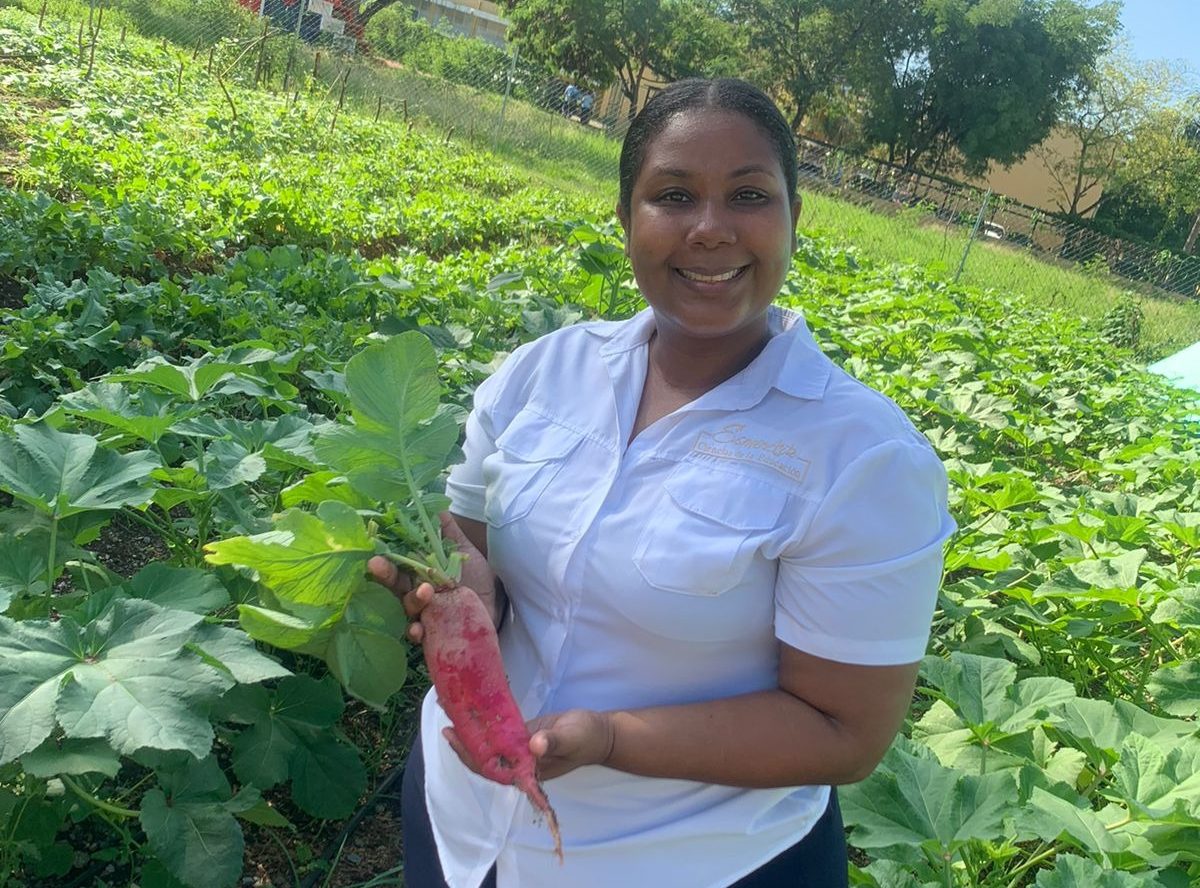
1. Cultiva Tech: when a school garden becomes a living laboratory – Dominican Republic
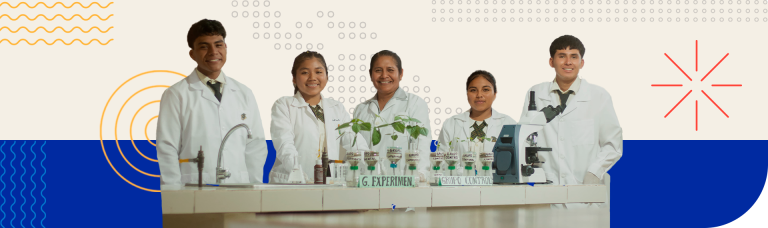
What do you do when a school crop doesn’t turn out as expected? This was the question that prompted students taught by Juana Esmeralda Ventura to create “Cultiva Tech”, a project that transformed the school garden into a space for applied scientific research. The idea arose after a chemistry lesson on photosynthesis, when fifth-year high school students noticed that the lettuce grown at school had a bitter taste. “We decided to conduct research using the steps of the scientific method to understand the causes,” says the educator.
The data collected allowed them to identify the cause: a lack of water, resulting from an inefficient manual irrigation system. Based on this finding , the project evolved into a proposal for continuous crop monitoring using soil moisture sensors, integrating science teaching, data analysis and real problem solving.
“The course [from Solve for Tomorrow Latam] has been enriching. It helped me identify potential partners and collaborators both inside and outside the center,” says Juana. She explains that thanks to agreements between the Ministry of Education and the Ministry of Agriculture, her school received support to restore the automated irrigation system and improve the production of the orchard. Today, in addition to healthier vegetables, the project provides students with more meaningful learning experiences.
2. UFP in Tacacá: learning about sustainable food through traditional knowledge – Brazil
In Parintins, in the state of Amazonas, northern Brazil, teacher Aldemira Jacaúna Machado found a teaching opportunity in the Amazonian food culture. Her project “UFP (Unconventional Food Plants) in the Tacacá: Sustainable food education based on traditional communities’ knowledge”, proposes using unconventional food plants (UFP) and traditional knowledge to promote science education.
The starting point was a typical regional dish, tacacá, which the project uses to explore topics such as biodiversity, healthy eating, sustainability, and cultural heritage, the teacher explains.
Although the project has not yet been implemented with students, Aldemira plans to develop research activities such as mapping local species, interviewing community members, and developing recipes, connecting what students learn at school with their everyday lives.
The educator was already familiar with active methodologies, but had not yet worked directly with PBL. “The course broadened my understanding of how to organize more investigative and student-centered activities,” she points out.
In addition, according to the teacher, the course also helped transform an idea into a project ready to be implemented in the classroom. “The project has gone from being a series of activities to becoming a more structured proposal, with a clear central problem, well-defined stages (research, experimentation, creation and exchange) and a greater role for students in the learning process,” she concludes.
3. Investigate plastic to understand its health and environmental impacts – Peru
In Peru, teacher Silvina Sonia Corpus Mendoza decided to bring into the classroom a problem she had observed in her daily life: the widespread use and burning of plastic bags in both a rural community in Piura and in Lima Metropolitana, and their possible effects on health and the environment.
Her project, “Study of polyethylene in plastic bags and the release of polluting gases by heat action,” seeks to analyze how the chemical composition of these materials influences the release of pollutants when plastic bags are exposed to heat or used to hold food.
Silvina designed a proposal in which students would research the chemical composition of polyethylene, identify the gases released when plastic is exposed to heat, and develop informational materials such as posters and infographics, to raise awareness in the school community about reducing the use of plastic bags.
According to the teacher, the PBL course was especially useful for better organizing the project. “I was already familiar with the methodology but not with the Canvas model, which gave me a more complete and agile picture of a single page”, she emphasized.
In addition, the educator reveals that the training helped her refine her ideas. “The approach began as a broad exploration, but I managed to transform it into a specific technical study. A significant breakthrough was the design of a detailed four-week timeline that organizes the work from the empathy phase to the final evaluation,’ she adds.
Do you want to know firsthand what’s new on the Solve for Tomorrow Latam platform? Subscribe to the newsletter here.
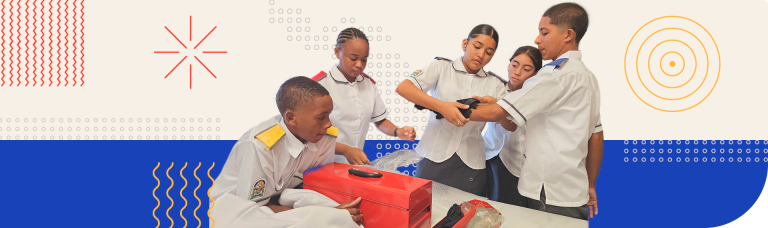
* The cover photo shows students from the Neolimb project, a 2023 finalist in the Solve for Tomorrow competition in Paraguay.