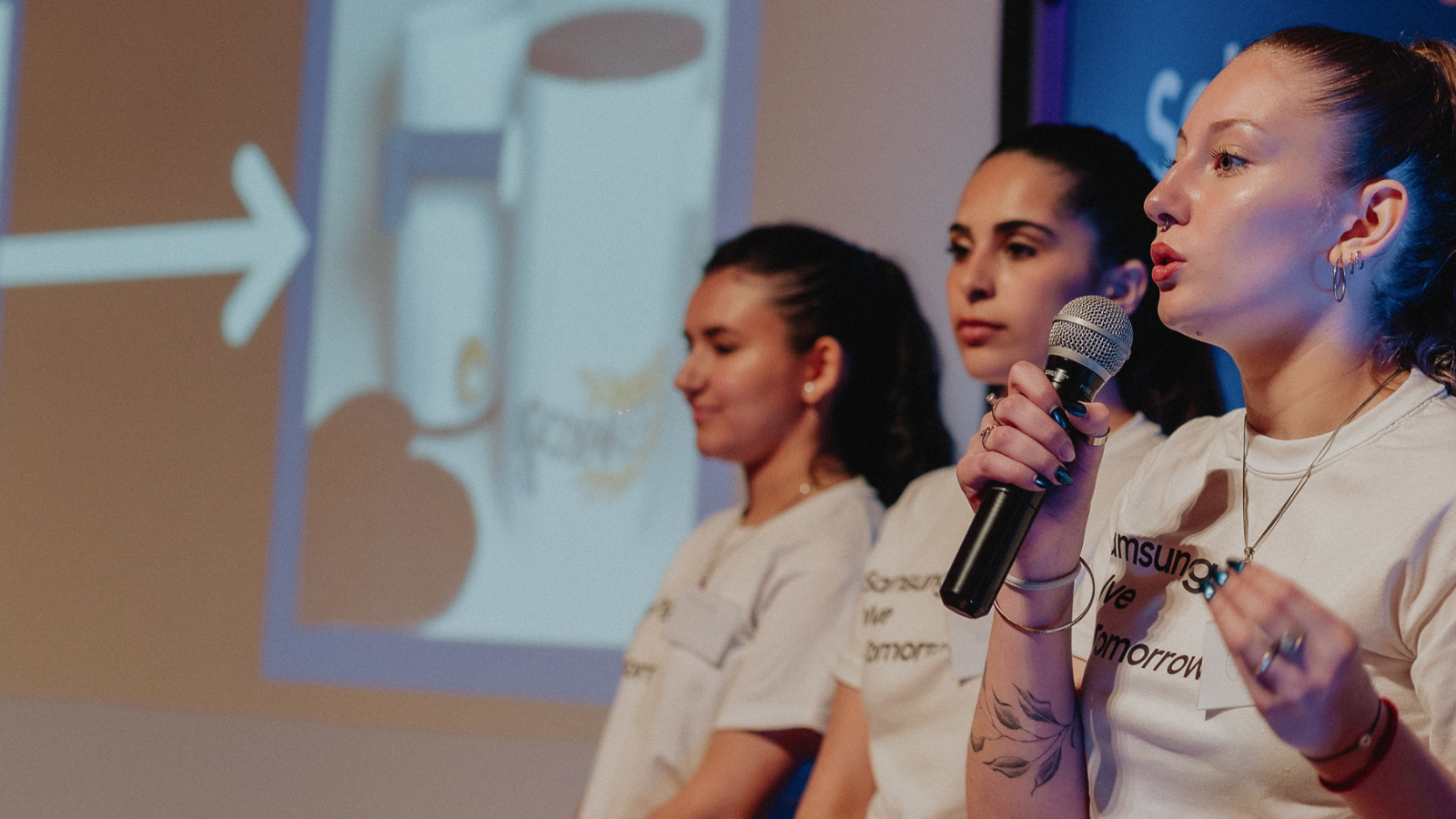
In schools across different regions of Latin America, students have been turning community challenges into scientific solutions – and with girls and women ahead of innovations. Whether in the countryside, the city, Mexico or Brazil, initiatives that encourage girls in STEM (Science, Technology, Engineering and Mathematics) show how education can strengthen female leadership from an early age. They investigate real problems, such as waste reuse or sustainability in agriculture, and discover that science is not distant from their daily lives, but is a concrete tool to generate positive impact on the territory where they live.
Gender inclusion in STEM is key, especially in a context where only 35% of students enrolled in these areas in higher education worldwide are women, according to 2017 data from the United Nations Educational, Scientific and Cultural Organization (UNESCO). The gap starts much earlier, still in school, when girls have less incentive to pursue paths in science and technology. Therefore, practical learning experiences can be decisive in changing this landscape.
The Solve for Tomorrow program, present since 2014 in Latin America encourages the participation of girls, determining that the groups of students are mixed. “We are very proud to see that in recent years they have been the majority of participants in Latin America,” says Sueme Matuzawa, Corporate Citizenship Manager for Samsung Latin America.
For Matuzawa, when students are encouraged to investigate problems of their own territory, science is no longer abstract and has a direct impact on people’s lives. In this process, many girls take on prominent roles, leading experiments, analyzing data and presenting solutions. “These experiences help to strengthen his self-confidence and broaden his interest in scientific careers,” he says. An example of this protagonism appears in the project “JENNI”, developed by a team made up only of girls, mediated by teacher Maria Reyna Borja. The idea was born from the story of two cousins, one of them a prosthesis user. Driven by the desire to help people with similar realities, the Mexican students decided to create an application aimed at those who use prosthetics, gathering information, guidance and tools that facilitate the process of adaptation. The project was a finalist of the program in the country, in 2024, and shows how girls can bring new perspectives to science, connecting empathy, listening and innovation to develop solutions with direct impact on quality of life.
If I see an opportunity to support women, I do it, because by supporting one, we all support each other, says teacher Maria Reyna Borja.
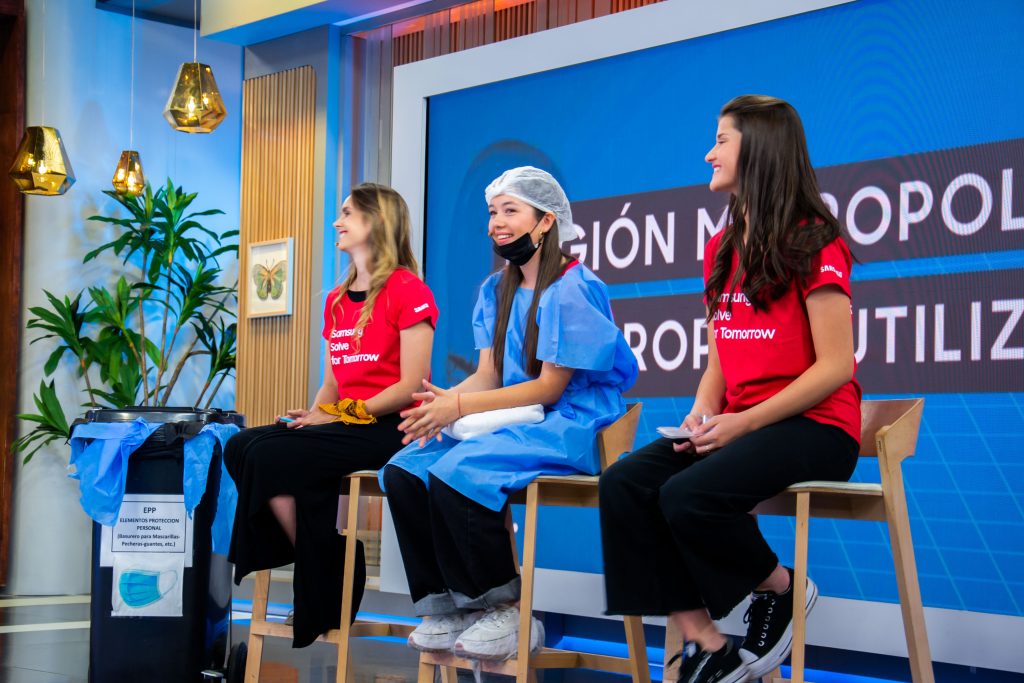
Another highlight is the project “Las propireutilizadoras”, also developed by an exclusively female team, which faced a critical challenge related to the disposal of waste from health services. Teachers Luz Astaburuaga and Pilar Swett mediated two 17-year-old students, who were in the last year of compulsory schooling. Together, they developed a machine capable of reusing these materials, proposing a more sustainable alternative to a complex environmental and health problem. All the work on the project took less than two months. “I think they learned a lot about trusting and listening to the partner; valuing each other’s ideas and persevering, because it took trial and error until it worked,” Swett emphasizes.
Girls in STEM: leadership that starts at school
The earlier students come into contact with scientific research and real-world problem-solving, the greater the chances that they will consider pursuing career paths in these areas and changing current statistics. In projects developed at school, girls can exercise experimentation and strengthen the confidence that they can also act in scientific and technological fields. Throughout this process, they have the opportunity to develop core competencies in these areas such as critical thinking , collaboration , creativity and problem solving at school.
Encouraging girls’ early participation in STEM is also essential to broaden diversity in science. When more women occupy these spaces, new perspectives become part of the construction of knowledge and the creation of solutions, often connected to issues that are perceived and lived by them in different ways in daily life.
Even when they are men in the role of mediator teachers in projects like these, having a team with girls makes a difference. This is what professor Yamil Vega, from the “Apyphore” project, finalist of Solve for Tomorrow, believes. Bringing together five students from Costa Rica, the team created a smart beehive with sensors and cameras for monitoring bees. “I am a father of two daughters and this career has the particularity of having more men. I see few girls connected to the STEM areas and try to work so that they also see this path as a possibility”, says the professor.
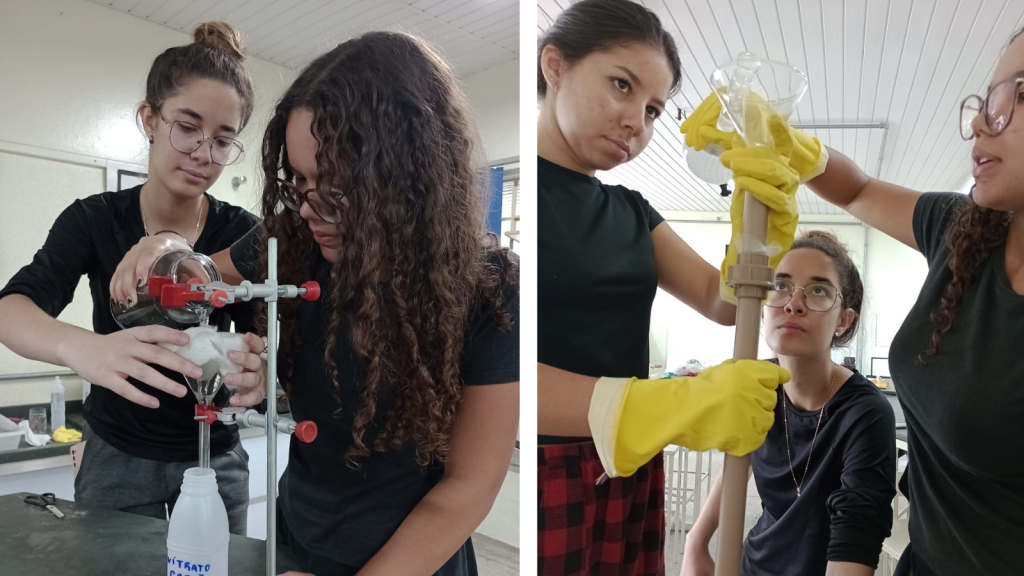
It is also the case of “Macafiltro”, which had as teachers mediators Henrique Pereira and Camila Carvalho de Paula Nunes. The project was a finalist of Solve for Tomorrow Brazil, in 2022, and had a group of three girls, who after that experience, went to study colleges in the area they dreamed. Professor Pereira tells that one of them took a taste for science and entered the course of Chemical Engineering, determined to change the direction of her own family’s history through knowledge. “This student came from a very difficult family reality. With Solve for Tomorrow, for the first time in his life, he saw that dedication at school could provide new things,’ he reports.
In the “Chonta-Tec” project, professor Carlos Moya mediated a team of three girls who created a prototype that converts the force of footsteps into energy to bring light to communities. “As teachers, we must provide the opportunity to shorten gender barriers in these areas, because it allows us to take advantage of the talent and skills of the entire educational community and the general population,” believes Professor Carlos Moya. He adds that after Solve for Tomorrow, girls’ interest in being part of STEM projects has been growing at school.