Young people who are at the stage of completing their basic education and moving closer to the point at which they enter university were born in a time of climate collapse. They can see in their own communities and territories the effects of global warming, the lack or excess of rain and rising sea levels, along with air pollution and deforestation of biomes. In the survey Adolescents, youth and Climate changes in Brazil, developed by the International Center for Studies and Research on Childhood (CIESPI), 68.5% of the country’s young people declare that they feel afraid, anxious and insecure regarding climate change.
But it is the very same young people who, in Brazil and Latin America, are coming up with solutions for environmental problems based on knowledge that they have acquired at school. This is the perception of Eliade Lima, physicist, astrophysicist and mentor of the Solve for Tomorrow in Brazil initiative, by technical partner Cenpec.
Lima mentors STEM projects put forward by young people living in both urban and rural contexts, and notes that there are differences in their perception regarding climate and in the solutions they propose. Urban students exhibit greater concern in relation to more general topics, such as recycling. Whereas, young people from rural contexts, on account of the fact that they are more in touch with nature, come up with prototypes that deal with the problems reported by their communities.
“The minds of young people who are in contact with the reality of rural life are full of thoughts of change: ‘I am able to make changes, I am a transforming agent’. This is the idea that has come up in the projects of Solve for Tomorrow Brazil. Young people who live in a rural context, also consult their communities more. They ask the elders, the traditional populations: ‘will you allow us to do this, do you like it, do you approve?’ This is a different posture to traditional scientists, who usually arrive and try to impose themselves, thinking they know more”, explains Lima.
Among the STEM projects that are most frequently seen, the mentor points out that concern in relation to waste disposal and sustainable replacements for everyday materials, such as plastic, are the ones that appear the most. For example, in the Mangoplast project, finalist of the 2024 edition of Solve for Tomorrow Paraguay, students created a bioplastic from mango seed.
The growing number of STEM projects related to the environment do not suggest a momentary concern with the subject, but rather a lasting change in young people’s way of looking at the future . “These students take leftovers, even if they do not take the project forward. They take language, researcher characteristics, methodologies and often the desire for a scientific career. And most important: the prospect of becoming a scientist who brings back to his community a more empathetic and meaningful way to develop science together with it”, concludes Eliade.
Check out other finalists and winners of Solve for Tomorrow projects that consider the environmental solutions theme:
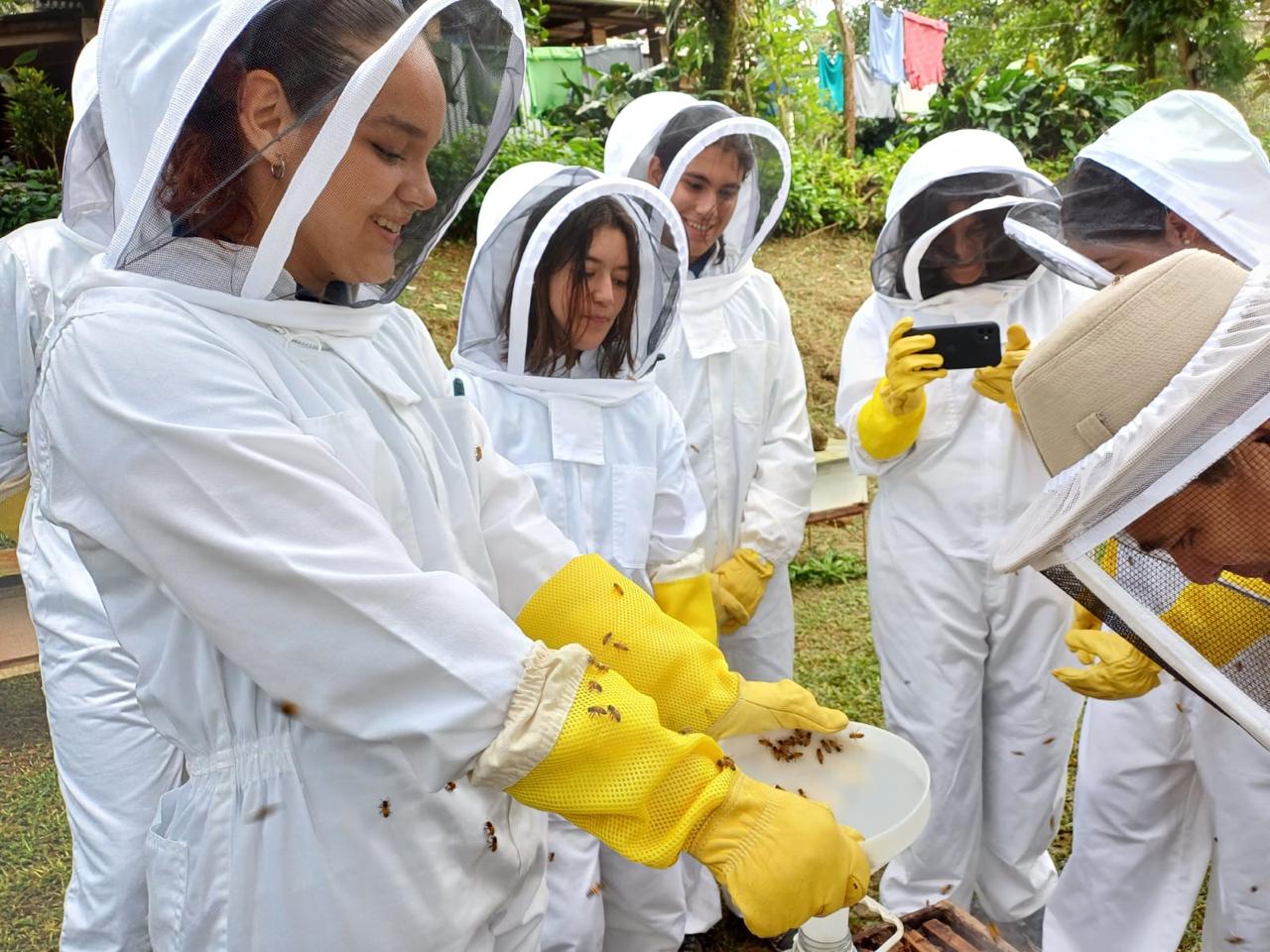
Apyphore (Intelligent hive for apitoxin extraction) – Finalist of the Solve for Tomorrow in Costa Rica in 2024: Bees play an essential role in global world agriculture, and their numbers are declining. To mitigate this problem, the students created a smart hive with sensors and cameras for monitoring the bees, providing real-time data aimed at ensuring the welfare of the bees and facilitating remote management by beekeepers.
Rhizobium – Winner of Solve for Tomorrow in Peru in 2024: The group created a biological fertilizer as a sustainable STEM solution in agriculture, which is the main economic activity in the region. The rhizobium bacteria, which is found in agricultural soil, was the alternative to chemical fertilizers that was developed by the students
Bastet Haus – Finalist of Solve for Tomorrow in Argentina in 2024: The group of students came up with a powerful solution that tackles two challenges, namely sustainability and homelessness. Using cigarette butts, which are harmful to the environment, they developed a sustainable resistant type brick that was low cost, and can therefore be used for building affordable housing.
Macafiltro (Using macaúba palm to remove pesticides from contaminated water) – a Solve for Tomorrow finalist in Brazil in 2022: excessive use of pesticides can have a negative impact on groundwater and the water that supplies homes in rural areas. Thinking about how to avoid its use, a group of students used the fruit of the macaúba palm to produce a natural filter.
Smartbin – The Winner of the Solve for Tomorrow initiative in Paraguay in 2024: Concerned about the fate of the waste produced at school, three young people developed a smart waste container that converts organic waste into biogas, a clean and renewable energy source.